Deep Dive: Proper Protection Lacking as Insolvency Epidemic Awaits UK Punters
An epidemic of insolvency cases could be heading the gambling industry's way, leaving punters at risk of losing thousands of pounds in the process.
 Right photo courtesy of the UKGC

Short Version
- BestOdds is the latest operator to be declared insolvent, pending the appointment of an insolvency practitioner, after BresBet and Bet St George were so just a month ago. It's a worrying trend that is bound to continue, with taxes continuing to increase for gambling businesses.
- We have spoken to eight punters who, between them, now have over £3,000 sitting in BestOdds accounts that they can no longer access. Given the small sample size, it's not unreasonable to suggest that the total figure could be pushing £100,000.
- Per UKGC regulations, there are three protection levels when it comes to customer funds: High, medium and no protection. While the first two are likely to give punters their money back, no protection is just what it sounds like. Unfortunately, many operators fall into this category.
- The UKGC sits on a high horse of 'protecting' punters from the dangers of unlicensed betting while, paradoxically, allowing operators not to protect the core of it all: the customer funds. Even if operators are required to admit that to punters once every six months, that is not enough.
- In an ideal world, high and medium would be the only legal protection levels. If we (begrudgingly) assume that won't materialise, then clearer communication is needed from the operators. For punters, checking the protection level and withdrawing funds more frequently is key.
How do you protect yourself from betting and casino sites suddenly closing down? That's a question every punter should be able to answer, yet very few actually know how their funds are handled by operators. But are they to blame for this lack of knowledge? Absolutely not.
At the beginning of November, the relatively new bookmaker BestOdds announced that the site had shut down with immediate effect. Insolvency of the owning company was cited as the reason, landing like a bomb for punters with accounts on the site.
Note: In the email that was sent out on November 5, BestOdds said that the company is "in the process of being placed into insolvency", with an insolvency practitioner yet to be appointed, albeit due shortly. At the time of writing, however, no further communication has been made on this.
Some might have understood that something fishy was going on, since the site had been unreachable for a short period before the announcement, but it was reasonable to pin that down to technical issues. Especially with all the hacking attempts taking place recently.
And so, when the shutdown was confirmed, complaints about not being able to access the accounts quickly turned into despair. What about the money? No heads-up, no elaborate explanation of what happens next, just a right-hook to the punters' faces.
We immediately published an article on the whole situation, adding a contact form at the end to hear directly from you, the punters. Much to our surprise, we were flooded with emails and the amounts mentioned in those - i.e. money sitting in BestOdds accounts - were staggering.
There and then, we understood that there is a massive problem and even a loophole, if you like, with little to no protection from the UKGC. As the tax rates are increasing for gambling businesses, the feeling is that we are entering an era of more bankruptcy cases as well.
The biggest question thus becomes: What can punters do to protect themselves? We wish this was up to the UKGC, but as we will get into, that isn't the case at all. The worst part is that the commission has even failed to properly inform punters about this.
Staggering Amounts Up in Smoke
Before digging into the relevant regulations from the UKGC, it's worth taking a look at how much money we are talking about here. As said above, we got quite a lot of emails and most amounts are very high, so you can only imagine what the actual total amount is.
The highest balance amounted to a whopping £2,200, which we confirmed with a screenshot, and that withdrawal was requested just a few days before the site became unreachable. Talk about being unlucky. Below, you can find the amounts we were sent (not everyone specified an amount):
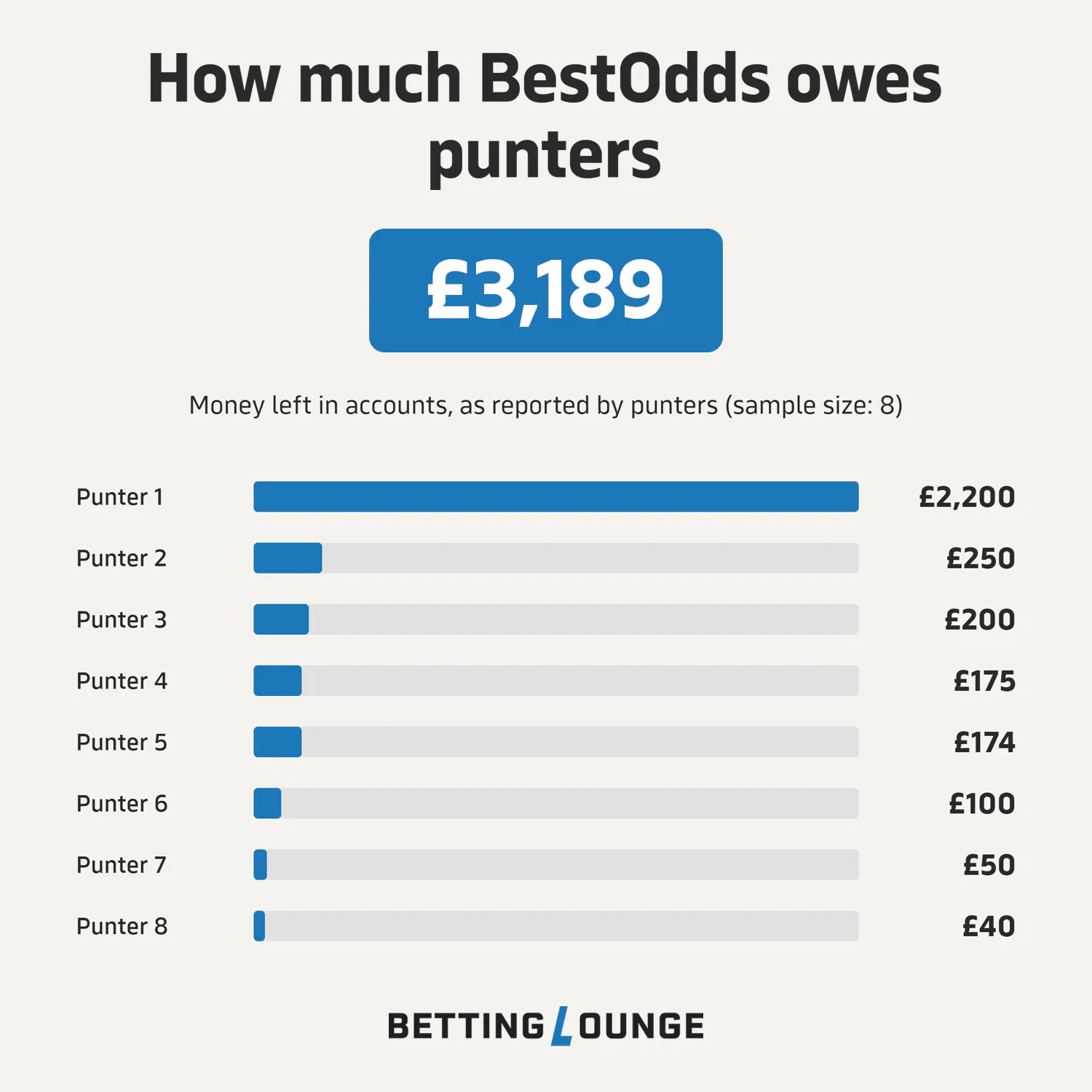
That adds up to just shy of £3,200 and you have to assume that this is a very small sample size of the affected punters. We could easily be talking about a total figure pushing £100,000 if not more, which says everything you need to know.
BestOdds is also far from the first bookie to enter into administration. Just a few months ago, Bet St George and BresBet initially surrendered their licences, following an investigation from the UKGC. Punters were told to contact customer support to withdraw their funds.
However, shortly after, the two companies behind the sites confirmed they were insolvent. That started the administration process and the customers stopped getting replies regarding the withdrawals, just like with BestOdds.
Given just how popular Bet St George became after a huge marketing push at the Cheltenham Festival, while BresBet had been around for several years, we would imagine that the outstanding balance to punters is even higher than BestOdds for those two (individually, not combined even).
In other words, we are talking about three UKGC-licensed sites and likely hundreds of thousands of pounds. What happened to the player protection? To understand why insolvency significantly increases the risk of not getting paid, we have to look at the UKGC regulations.
What the UKGC Regulations Say
If you read through the UKGC's website in the relevant sections, you will immediately understand that there are almost never any guarantees in these cases. Indeed, "There is no guarantee that customers get any of their money back if the business runs into financial difficulties," the site reads.
"Those using gambling businesses do so at their own risk" is also added, which is a bit ironic when you consider that the UKGC is using safety as a selling point for not betting on unlicensed sites. Of course it's a risk, but losing your bet isn't the same as losing your money because the bookie has shut down.
Anyway, while the UKGC requires all licensed operators to keep the customer funds separate from the rest of the business funds, the level of protection varies. As long as the operators explain what their protection is (isn't), that's completely compliant.
There are three levels to note: high protection, medium protection and no protection. If an operator opts for no protection, not a single penny of the customer funds will be protected, which is fair as long as the operators inform their customers of this once every six months.
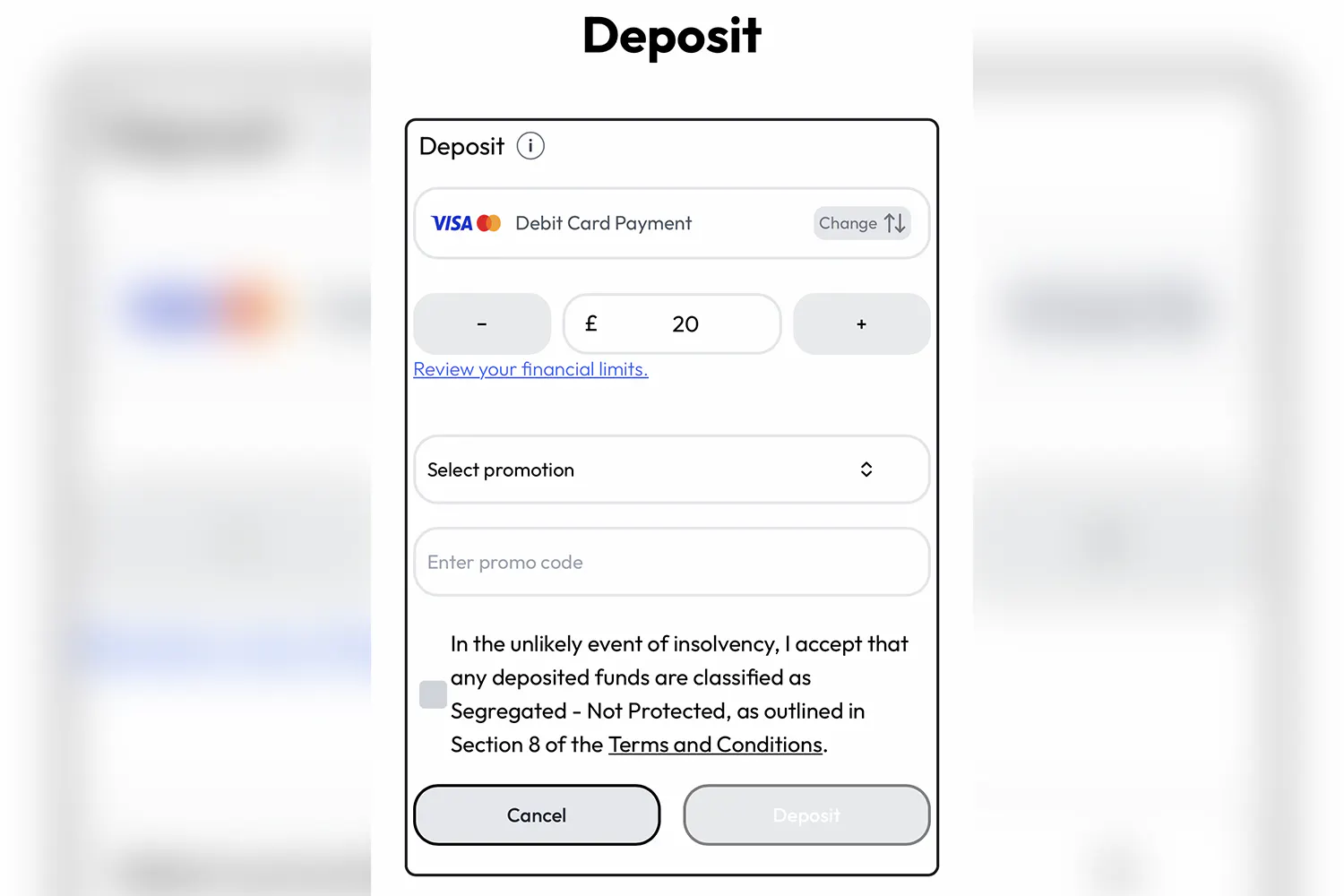
In the image, there is an example (BettaBet) of how the no protection disclaimer is shown, albeit only for the first deposit. After that, only the message every six months keeps punters in the loop.
- High protection: "Your money is held in a separate account, and is legally recognised as separate from the business. The money in your account is controlled by an independent trustee and is also checked by an external auditor. You have the highest level of protection and the best chance of getting your money back if the business becomes insolvent."
- Medium protection: "The gambling business has made arrangements to protect your money if it becomes insolvent. There are different ways to do this, for example, by having insurance. However, it is not absolutely guaranteed that you will get your money back if the business becomes insolvent."
- No protection: "Any money in your account would be classed as part of the gambling company’s assets if it becomes insolvent. You would likely lose any money in your account."
The protection level of a bookie can be found in the terms and conditions, sometimes called terms of use, by searching for 'insolvency'.
Which category do you think BestOdds, BresBet and Bet St George belong(ed) to? You got it, no protection! Therefore, it's likely that the insolvency practitioner will focus on paying those who could pursue court proceedings, from platform providers to marketing agencies and other partners.
The customers, on the other hand, are likely to receive the short end of the stick, as the UKGC clearly states (kudos for the honesty at least). And those are perhaps the people who need the money the most, so there is even a socioeconomic aspect to this ordeal.
In case you're wondering if all sites end up in the no protection category, that's certainly not the case. Ladbrokes, as an example, has high protection for its customers and Midnite has medium protection. It's much more common to see this among the best betting sites around.
Protection Measures Going Forward
It feels just a tad contradictory that the UKGC is there to protect the punters, all the while giving operators the opportunity not to protect the deposited funds. Yes, they do have to make that clear to the punters and message about it every six months, but it can easily be overlooked.
A lot of new bookmakers these days appear to be very trustworthy. BresBet is a perfect example as the bookie had an on-course presence before the online expansion, and even the people behind the brand are well-known.
Viewing it through that lens, it's certainly easy just to click past the message about funds protection. If anything the number of emails we got from customers asking what happens next/what they can do shows that there is a knowledge gap that the UKGC haven't done enough to fill.
Besides, what is even the point of having the customer funds in a separate account if, in the end, the funds are considered to be "part of the gambling company’s assets"? Perhaps it's time to change the minimum requirement to at least medium protection...
The word loophole was used earlier and it doesn't feel completely out of place. As said, losing a bet (and subsequently money) is nowhere near the same as being deprived of your hard-earned money out of the blue, for something that doesn't even have anything to do with you! Because let's make one thing clear, regardless of what the UKGC says, the money in your account is yours.
We feel that even more protection is needed. If we stay realistic (begrudgingly) and assume that the current protection levels will remain as they are, one good improvement could be to specify the level next to the player's balance in the cashier.
In other words, every time a punter goes to deposit or withdraw, a message explains how the funds are handled by the operator. That might result in withdrawals being made more frequently, rather than letting funds linger in the account.
Reading through all of the emails from BestOdds customers got us thinking as well. We haven't done enough to educate our readers on this topic and we can do a lot better when it comes to highlighting what protection level a bookie has.
Our promise, as such, is to make it a key part of our reviewing process. It won't just be stated in the fine print somewhere; you have our word!
In the meantime, if you want to give yourself good protection, opt for one of the operators that fall in the high or medium protection categories. If you still really want to try out an operator with no protection, then make sure to withdraw your funds frequently.
We really cannot overstate the importance of the above. Who knows which bookie will be next...
Tip Line
Do you have a tip or information that you would like to share with us? Let us know with the help of this contact form.

Isak is an experienced content writer with a background in sports journalism. Having focused mainly on football in the past, he certainly knows a thing or two about the betting industry and what makes a good bookie. At BettingLounge, he makes sure that the content is up-to-date and presented in the best way possible.